Buyer's Guides
Custom Printed Ribbon Wholesale: Materials, MOQ & Buying Guide
Oct
Last updated:
Last updated: October 2026
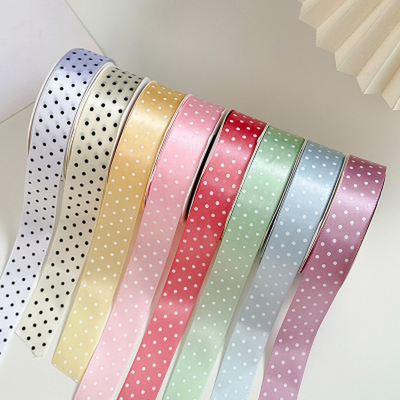
Custom printed ribbon wholesale is how flower shops, event studios, and brands turn packaging from a cost line into a marketing asset. A logo printed on a 2.5cm satin ribbon costs only a few cents per bouquet — yet it puts your brand in every unboxing photo your customers post.
Buying custom printed ribbon wholesale: what to know — this guide covers ribbon materials, print methods, minimum order quantities, lead times, and the ordering checklist that prevents expensive mistakes.
Why branded ribbon pays for itself
A bouquet is photographed at least twice: once by the recipient and once by whoever bought it. If your shop name is printed on the ribbon bow, your brand travels with every bouquet — through Instagram, Pinterest, and wedding forums — at zero ad cost.
The math is straightforward: at typical wholesale prices, a 60cm length of printed ribbon adds US$0.08–0.15 to a bouquet’s material cost. One bouquet posted by a satisfied customer reaches more local eyes than most boosted posts. Compared with stickers or printed sleeve bags, ribbon also looks better — it reads as premium, not promotional.
Retail chains, wedding planners, and corporate gifting buyers use branded ribbon most aggressively: when 200 guest-table arrangements carry the same logo, the venue becomes a showroom.
Ribbon materials: satin vs grosgrain vs organza
Not every ribbon prints equally well. The three materials that matter for custom print:
| Material | Print quality | Best for | Custom-print minimum |
|---|---|---|---|
| Satin (single/double face) | Excellent — sharp text, smooth background | Bouquet bows, premium branding | Quoted per design and print method |
| Grosgrain | Good — slight rib texture, very durable | Gift packaging, high-handling orders | Quoted per design and print method |
| Organza | Fair — translucent, best with one-color print | Wedding decor, sheer accents | Quoted per design and print method |
For florists, satin is the default choice — see our florist ribbon size chart for width guidance. The standard branded-ribbon widths are 1.5cm, 2.5cm, and 4cm; 2.5cm is the workhorse for bouquet bows, while 4cm suits large event arrangements.
Print methods: which one fits your order?
- Foil stamping (hot foil). Gold or silver foil pressed onto the ribbon — the luxury look. Setup cost is higher (a metal die per design, typically $50–100), but the result is unmistakably premium. Best for one-color logos on dark ribbon.
- Silk-screen printing. Ink pushed through a screen onto the ribbon. Handles 1–2 colors cleanly and is the most common method for stock designs and logo repeats. Setup is moderate ($30–80 per color).
- Digital (inkjet) printing. Full-color logos, gradients, and photo-quality prints. Lowest setup cost, but per-yard pricing is higher — best for complex multicolor designs where foil or screen can’t work.
A practical rule: one-color logo → foil stamping or screen print; multicolor or full logo → digital. Ask the supplier which method they recommend for your artwork — a good supplier will steer you to the cheaper method when it works.
MOQ, lead time, and pricing
- Minimum quantity: Stock ribbon uses the sales unit and increments on its product page. Custom printing has its own minimum, setup cost and production terms, confirmed for the design and method before approval.
- Setup/die charges: Budget $50–100 per design for foil dies, $30–80 per color for screen setup. These are one-time charges — reorders of the same design skip them.
- Lead time: Expect 10–20 business days for production after artwork approval, plus freight. Plan seasonal orders (Valentine’s, Mother’s Day) at least 2 months ahead.
- Repeat interval: Your best defense against waste is to size the first order to 3–6 months of usage. A standard florist tying 40–60 bouquets a week uses roughly 500 yards in 2–3 months.
- Tiered pricing: Per-yard cost typically drops 15–30% at 2,000+ yards. Consolidate — order ribbon together with wrapping paper and sleeves in one shipment to share freight.
The ordering checklist (use before you pay)
- Artwork file: Supply a vector file (AI, EPS, or SVG). JPG screenshots of your logo will print fuzzy — this is the single most common source of bad results.
- Proof approval: Insist on a digital proof, and for orders above 2,000 yards, a physical strike-off sample. Check spelling, spacing, and color against your brand guidelines.
- Repeat spacing: Confirm the print repeat distance (typically 20–30cm between logo repeats). A repeat that is too dense looks busy on a bow.
- Color matching: Foil comes in standard gold/silver/copper; ink prints need Pantone references. Ribbon dye lots vary slightly — order your full season’s ribbon in one run if color consistency matters.
- Edge finishing: Confirm whether ribbon edges are woven (fray-resistant) or cut. Cut edges on satin unravel in humid conditions.
- Back-side bleed: On single-face satin, heavy prints can shadow through to the back. For double-face satin or thin ribbons, ask the supplier to confirm bleed is acceptable.
- Combine freight: Ribbon rolls are light but bulky. Ship them with your flower sleeves and wrapping paper orders — splitting shipments roughly doubles your landed cost per roll.
Want to see the standard widths and bows in action? Our bouquet wrapping tutorial page shows the exact ribbon lengths and bow styles we recommend.
Frequently asked questions
What is the minimum order for custom printed ribbon?
It is quoted for the ribbon, design and print method. A stock-product quantity step is not a promise that the same quantity can be custom printed.
How long does custom printed ribbon take?
Allow 10–20 business days for production after you approve the proof, plus freight time. Reorders of an existing design are faster since the die/screen is already made.
What file do I need for logo printing?
A vector file — AI, EPS, or SVG. Your supplier cannot produce a clean print from a JPG or PNG screenshot of your logo.
Which ribbon width is best for bouquet bows?
2.5cm is the standard for hand-tied bouquets; 1.5cm suits mini bouquets and gift accents; 4cm is for large event arrangements. Full guidance is in our florist ribbon size chart.
Is custom printed ribbon worth it for a small flower shop?
If you order at least 500 yards and sell 40+ bouquets a week, yes — the per-bouquet cost is under $0.15, and the brand exposure in customer photos is hard to beat at any other price.
